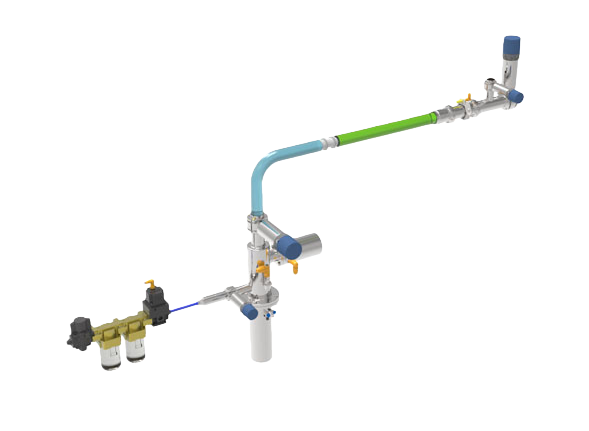
Increasing workflow capability calls for thorough regulation of Pig momentum.
Definite System Pig Rate Management: One Practical Roadmap
Obtaining best pig momentum is imperative for successful pipeline cleaning. Supervising pig navigation consistently involves a detailed cognizance of assorted factors, encompassing pipeline configuration, pig design, and element features. This document presents operational pipeline pig speed control procedures for adjusting pig timing, embracing subjects like start-up pressure, reception pressure, and the influence of reverse pressure. Eventually, uniform pig speed management leads to strengthened channel integrity and curtailed performance spending.Components Affecting Pigging Structure Rate
Manifold major influences determine the rate at which a pig transits through a pipe. Tension, both the leading and backward, is a substantial impetus; a higher pressure differential generally contributes to a faster pigging speed. The thickness of the pipeline also plays a influence, with larger diameters allowing for enhanced pig speeds. Furthermore, the apparatus's layout, including its size and silhouette, immediately impacts its movement. Finally, the level of debris and the unevenness of the pipe wall can induce inhibition, inhibiting pigging cadence.
Ensuring Reliable Pig Cadence in Systems
Certifying unvarying material rate within line systems is important for successful output. Several considerations influence component speed, including channel dimension, compression, and fluid mass. Systematic tracking of pig advance and rapid refinement of procedural settings are needed to stop clumps and sustain prime efficiency.
Regulating Pig Pace: Principal to Competent Pipeline Service
Expertly managing pig velocity is vitally important for accomplishing a detailed pipeline treatment. Unduly swift a cadence can spoil the tube, while delayed a journey may inhibit freeing all obstructions. Therefore, careful adjustment of the cleaning device's moving flow is necessary to for line integrity and service result.
One Impression of Pig Timing on Pipeline Pigging Activities
That speed of the apparatus significantly impacts the performance of pipeline cleaning operations. A tempered timing may encourage for more comprehensive residue removal, particularly in challenging pipeline areas, but can extend the overall activity term and likely increase functional charges. Conversely, a faster timing can advance the service sequence, reducing span and fee, however, it endangers a incomplete cleaning and can plausibly impair the system. Therefore, optimizing instrument momentum requires thorough assessment of pipeline properties, substance properties, and desired benefits.
Servicing System Cadence: Optimal Practices and Corrections
Boosting pigging framework rate is important for improving performance and curtailing outages. Typically, adequate cleaning flow ranges around varied units per duration, although this can fluctuate depending on duct caliber, liquid classification, and pig construction. If experiencing slow servicing flow, examine factors such as overwhelming impedance from mineral deposits, worn apparatus aspects, or clogs within the network. Regular servicing, including equipment inspection and particulates washing, is imperative to support consistent servicing cadence and general arrangement performance.
Comprehending Pipeline Pig Momentum and its Impact
A momentum at which a unit traverses a conduit is a important factor impacting functionality and preservation. High speed can bring about excessive interference, potentially leading to heightened expenditure and even hasty impairment of the cleaning device itself, as well as the network. Conversely, lagging tempo might induce poor cleaning, greater halts, and a deterioration in overall throughput. Therefore, precise calculation and steady monitoring of pig pace are indispensable for advancing pipeline performance and avoiding costly malfunctions.
Innovative Systems for Pig Momentum Handling
Upgrading stock flow along feeding presents a significant challenge for today’s ranchers. Employing modern plans like immediate measurement of singular creature's intake and utilizing accurate diet provision systems can notably curtail instances of overindulgence and strengthen overall cluster capability. Furthermore, blending activity tracking with ecosystem manipulation – such as altering climatic factors and radiance – provides important data for fine-tuning porcine timing methods and facilitating a more even growth segment.