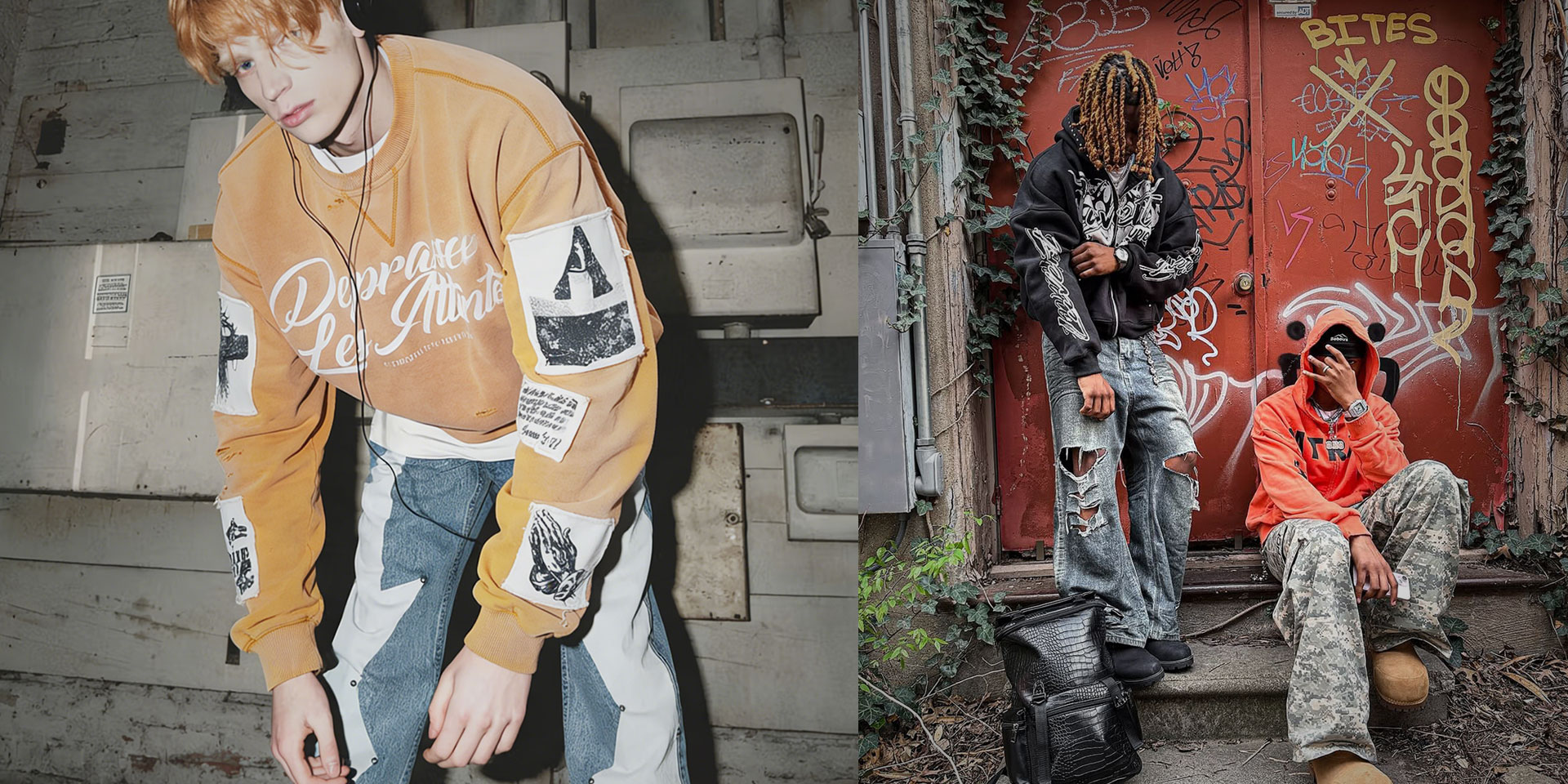
Why a Great Vintage-Wash Hoodie Starts Long Before the Wash Room
Vintage-wash hoodies are everywhere right now, but not all of them land the same way. Some feel like they already belong in a strong streetwear lineup the second you see them: the fade sits right, the body still has presence, the handfeel feels broken in without feeling tired, and the whole piece carries that hard-to-fake lived-in energy. Others look like a brand tried to force age onto a hoodie that never had much character to begin with.
That gap matters more than people admit. In modern streetwear, a vintage wash is rarely just a surface effect. It affects how the hoodie drapes, how the graphic reads, how the rib reacts, how the shade settles on seams, and how the product gets judged when it shows up on close-range social content. Many brand teams only realize this late in development, when a sample looks promising but the next round comes back flatter, weaker, or just off. The real question is not whether a factory can do a wash. The real question is whether the whole hoodie was built to carry that wash in the first place.
A strong vintage wash is not something added at the very end. It is the result of fabric choice, silhouette planning, wash testing, and bulk-ready production control moving in the same direction.
Why do some vintage-wash hoodies feel elevated while others just look overworked?
A good vintage wash feels elevated when the fade, texture, handfeel, and silhouette all support the same product idea. It falls apart when washing is treated like a shortcut. The best washed hoodies do not only look older; they look more intentional, more dimensional, and more believable on body.
That difference starts with how streetwear reads surface. Vintage in this space is not only about making a hoodie lighter, rougher, or dirtier. It is about building visual memory into the garment. Enzyme wash can soften the hand and reduce stiffness. Stone and enzyme combinations can create stronger abrasion and a more visibly aged surface. Acid wash can push a sharper, marbled contrast. Pigment and garment-dye approaches can deliver a faded tone that feels less raw and more atmospheric depending on the base and after-treatment.
But the wash type alone does not decide the outcome. What really separates a strong result from a weak one is whether the hoodie still has shape, intention, and attitude after the wash room is done with it. If the fabric loses too much body, the hoodie stops feeling premium. If the fade is too uniform, it can feel flat. If the distress is aggressive but the silhouette is generic, the piece can start reading like costume instead of product.
This is why the strongest streetwear hoodies usually make the wash feel native to the garment rather than pasted onto it. The fade should make the seams more interesting. The brushing or fleece should still feel substantial in the hand. The graphic, embroidery, or cracked print should look like it belongs inside the wash story, not like it survived it by accident.
Which fabric base actually gives a vintage wash something worth working with?
The base fabric matters as much as the wash itself. For most streetwear hoodie programs, a vintage wash performs better when the body starts with enough weight, fiber quality, and knit structure to survive softening, abrasion, and shrinkage without losing its shape or visual authority.
This is where a lot of hoodie development quietly wins or loses. Streetwear teams often talk about the wash first because that is the most visible part. In practice, the wash room is reacting to the base it receives. A weak fleece will not suddenly become special because it went through acid wash. A flat cotton blend will not magically gain depth because the shade got faded down.
Why is heavyweight fleece usually the better starting point?
Manufacturer-side guidance aimed at streetwear hoodies often places premium hoodie fabrics in the heavier range, around 350–480 gsm, precisely because those fabrics can better support structure, handfeel, and post-wash presence. More broadly, fleecewear sources describe the category as now spanning a wide weight range, with heavier fleece, sueded finishes, and garment-dyed treatments moving the category further into fashion territory.
For vintage-wash development, that matters in three ways. First, the base needs enough body before washing, because washing usually relaxes the garment. Second, the surface needs to react well to the chosen treatment. Cotton-rich fleece generally gives a wash more to work with than a base that leans too heavily on synthetic smoothness. Third, the rib, pocketing, hood panels, and drawcord area need to stay in conversation with the body fabric. A vintage wash that looks right on the torso but leaves the rib feeling underbuilt can drag the whole piece down.
GSM also should not be treated like the full answer. Two hoodies at the same weight can still behave very differently depending on yarn quality, fleece construction, face feel, and whether the fabric was prepared with wash development in mind. That is why experienced product teams do not approve a washed hoodie by weight label alone. They look at body recovery, seam reaction, color behavior, and how the hoodie sits after wash and dry.
How do silhouette and construction change the final washed effect?
Vintage wash is not just a color story. It changes how a hoodie hangs, how volume settles, and how details start speaking to each other. That means silhouette, pattern balance, rib proportion, hood size, and even zipper choice can strengthen the wash—or expose every weak decision around it.
Streetwear is unusually sensitive to silhouette. A boxy washed pullover, a cropped zip hoodie, and a long oversized fleece may all use related wash language, but they do not carry it the same way. Dropped shoulders, wider chests, shorter bodies, fuller sleeves, and stronger rib tension all affect how a faded hoodie reads once it is on body. If those decisions were never resolved before washing, the finish can make the garment’s weak points more obvious rather than less obvious.
This shows up most clearly in oversized programs. A lot of hoodies are still called oversized when they are really just larger standard hoodies. That difference becomes more visible after wash, because washing can soften the shoulder line, shorten the body slightly, move the pocket shape, and change how the hood collapses or stands. A well-developed streetwear hoodie keeps its attitude after that movement. A weak one starts looking deflated.
Construction details matter for the same reason. Rib that is too light can lose authority once the body softens. A zipper that felt acceptable in a clean sample can look too shiny or too thin once the garment takes on a stronger vintage face. Pocket placement can drift from feeling balanced to feeling low. Even drawcords can suddenly look overdesigned if the rest of the hoodie has moved toward a stripped, archive-inspired finish.
In other words, the wash does not hide construction. It reveals how serious the construction was all along.
Where does vintage-wash hoodie development usually break down between sample and production?
Most breakdowns happen when brands approve the vibe but do not lock the variables behind it. Vintage-wash hoodies often drift because fabric lots, wash chemistry, abrasion levels, measurement movement, and finishing choices were not translated into a disciplined approval path before production opened up.
This is the part many teams underestimate. A good first sample can create false confidence, especially when the conversation stays focused on moodboard language like “more faded,” “more vintage,” or “a little more destroyed.” Those directions are useful creatively, but they are not enough operationally.
Technical wash references show why. In stone-enzyme washing, result changes can come from stone size, garment-to-stone ratio, washing time, and bleach balance. Sampling guidance for streetwear hoodies also warns that vintage, enzyme, garment-dye, stone, and acid treatments can increase shrinkage, move color, and raise sampling complexity, which is why brands should define target shade and acceptable variation early. On top of that, quality guidance in apparel production notes that early shrinkage testing gives teams a chance to adjust pattern measurements before bulk production rather than after problems appear in finished goods.
That is why strong washed-hoodie development usually depends on several checkpoints instead of one attractive sample. A pre-production sample made with the real fabric, trims, measurements, and wash direction gives the brand something far closer to the production reality. After approval, that sample becomes the standard against which active-line production can be judged. TOP samples then give the team a way to see whether the live run is still holding the approved direction.
Notice what this approach does not assume. It does not assume a wash-heavy hoodie will behave exactly the same in every context. It builds a better control system around the parts that are most likely to move.
What should a brand team approve before moving a washed hoodie into production?
The smartest approvals happen before the hoodie enters full production pressure. Brand teams should approve the fabric base, post-wash measurements, shade direction, graphic reaction, trim behavior, and production-line sample path—not just a good-looking sample photo or one early prototype that happened to land well.
The first approval should be the fabric itself. That means the actual fleece direction, not a vague note about heavyweight cotton. Teams should know the base composition, weight range, surface feel, and how the rib relates to the body. If the hoodie is meant to feel dense before wash and relaxed after wash, that needs to be visible in the fabric approval stage.
The second approval should be the wash target in words and images together. Streetwear references are visual, but words still matter. Is the goal a dry, dusty vintage fade? A stronger acid-wash punch? A softer pigment-dyed archive tone? Without that language, factories often receive references that look similar on screen but behave differently once the garment is actually sewn and treated.
Why should post-wash measurements matter more than pre-wash assumptions?
The third approval should be post-wash measurement reality. This is where a lot of teams still think too cleanly. The pre-wash pattern is not the product. The product is what comes out after wash, dry, and finishing. If the body length, sleeve stack, hood opening, or hem tension feels right only before treatment, the development is not done.
The fourth approval should be decoration after wash, not decoration in isolation. A cracked print, puff print, tonal embroidery, or appliqué can shift in feel once the hoodie has been washed down. Sometimes that shift is exactly what gives the product character. Sometimes it makes the artwork feel too stiff, too new, or too disconnected from the garment face.
The fifth approval should be procedural: a clear pre-production sample path, and a plan for checking live-line output once production is running. This is especially important for US, UK, and EU streetwear brands working with China-based production teams, because distance makes late correction slower and more expensive than early clarity.
How should sourcing teams judge a streetwear manufacturer for wash-heavy hoodie programs?
The best way to judge a manufacturer is to see whether they treat vintage wash as a full product-development issue rather than a single finishing service. Good partners ask sharper questions, flag risks early, connect fabric to wash to fit, and show how they protect the approved direction once production scales.
This is where specialist thinking becomes visible. A general factory may say yes to a vintage-wash hoodie because they can technically send garments to a wash room. A more streetwear-focused team usually talks differently. They ask about fleece structure, desired handfeel, boxiness after wash, graphic behavior, shade target, rib reaction, and how the brand wants the hoodie to feel on body after the entire process is finished.
For procurement teams and product development teams, that difference is not small. It often tells you whether the factory understands streetwear as a cultural product category or as another sweatshirt order. Some specialized manufacturers for custom streetwear build their process around heavyweight fleece, custom trims, wash testing, and technique-driven development rather than basic commodity fleece programs. In that context, a resource like this industry roundup focused on Chinese streetwear clothing manufacturers can be a useful starting point when teams want to compare who is actually set up for this category.
The sharper evaluation questions are usually simple. Does the factory ask what the hoodie should feel like after wash, not just what color it should become? Do they discuss fabric testing before cutting? Do they explain how a drop-shoulder or boxy pattern may shift after treatment? Do they show a pre-production approval path? Do they speak clearly about inline checks, finishing checks, and active-line sample review instead of only promising a nice sample?
For brands with validated market demand, those are the conversations that matter. The vintage wash may be the visual hook, but the real decision is whether the manufacturer has the product discipline to carry that hook through development without losing the hoodie’s shape, feel, and identity.
Conclusion
A good vintage wash in streetwear hoodie development is rarely about one dramatic technique. It is about whether the whole garment was built to wear that technique well. The strongest results usually come from a heavier, better-prepared base; a silhouette that still reads right after wash; a clear testing path; and a sourcing team that treats wash development as part of the hoodie’s architecture, not as late-stage decoration.
That is also why the best washed hoodies tend to feel effortless only after a lot of disciplined work. They look easy because the fabric, fit, trim choices, wash direction, and approval system were all pulling in the same direction. In a market full of hoodies trying to look older, the pieces that really stand out are usually the ones that were developed with a sharper sense of what streetwear brands can notice immediately, even when they never say it in technical language.